
Single stitch vs double stitch: how to date a vintage tee
FILED BY @archivebytoon3 MIN READ
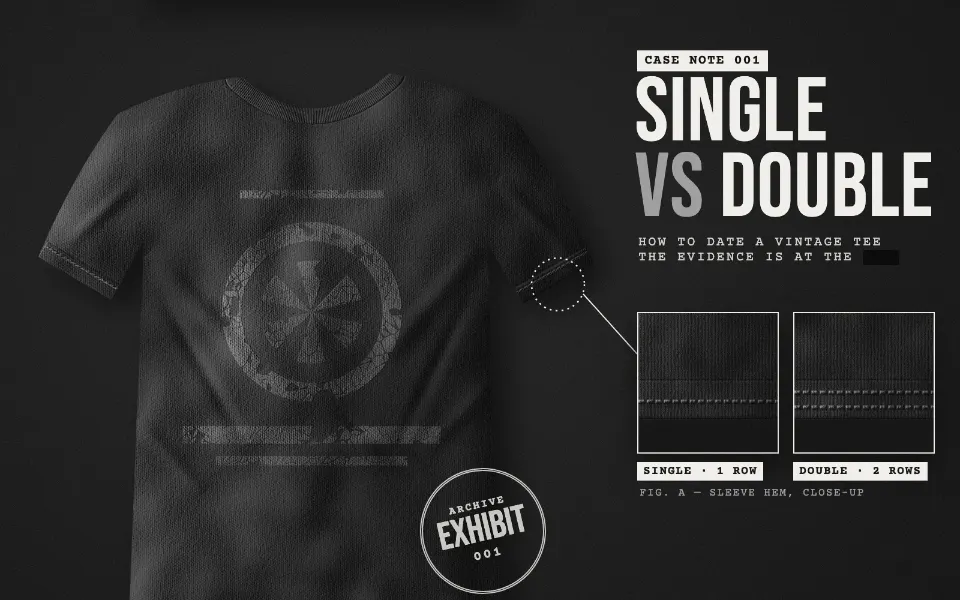
Flip the sleeve. Look at the hem. One line of thread or two can tell you roughly when a tee was made, and when someone is trying to fool you.
The evidence
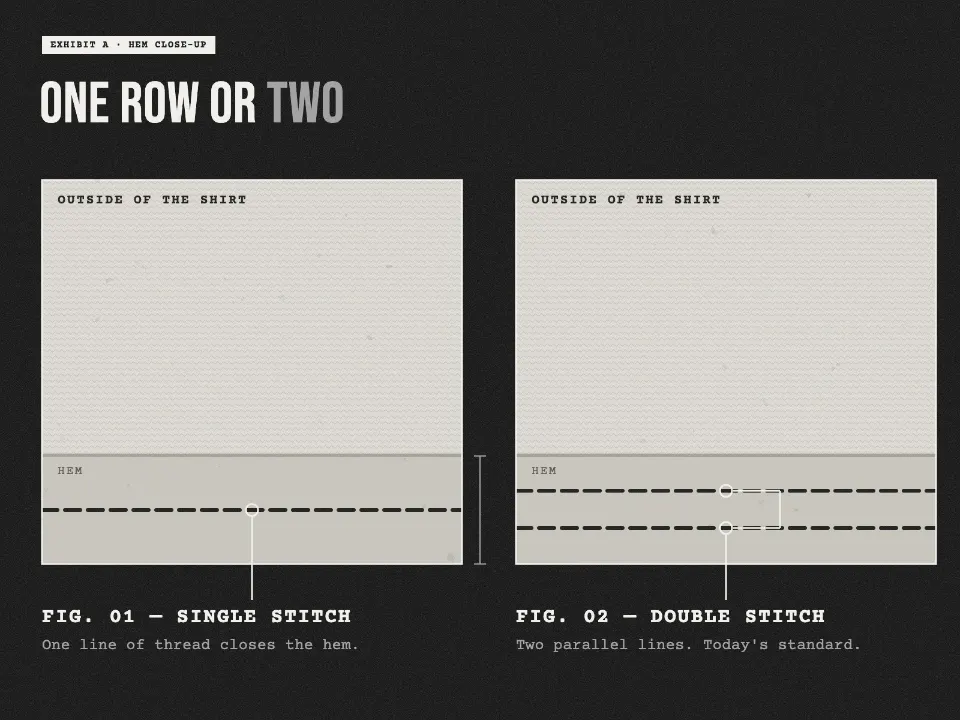
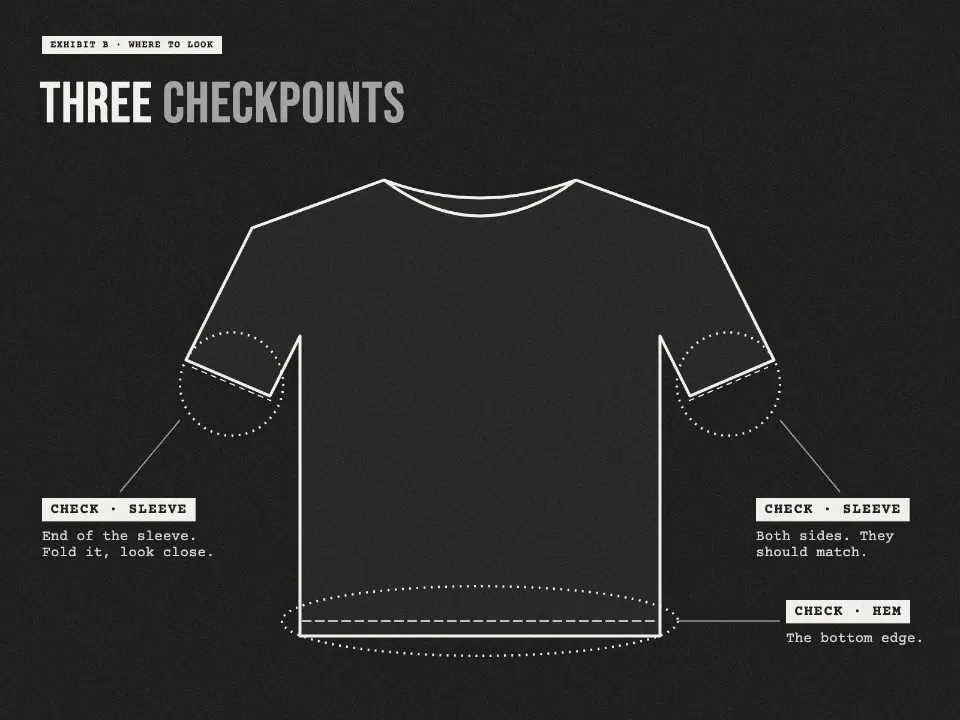
Every tee has hems. At the end of each sleeve, and along the bottom.
On a single stitch tee, each hem is closed with one row of stitching.
One line. Nothing else.
On a double stitch tee, you'll see two parallel rows.
That's what most tees made today look like.
The timeline
For decades, single stitch was just how tees were made.
In the mid 90s, the big blank makers moved to double stitch. By the late 90s it was the default.
The switch didn't happen on one day. In the in-between years you'll find shirts with one sleeve single and the hem double.
So read it like a date stamp with smudged ink:
Single stitch usually means made before the late 90s. Double stitch usually means after.
Usually. Not always.
Why collectors care
Most tees from the 70s, 80s and early 90s are single stitch, so collectors use it as a quick first check on the era.
That one thin line is why a collector's thumb goes straight to the hem.
It's a first check, not a price tag. Not every single stitch tee is rare. The print, the brand and the wear decide that.
The catch
A single stitch hem dates the blank, not the story printed on it.
A few premium blanks kept single stitch into the early 2000s.
Not every single stitch tee is as old as it looks.
Reprints often slip the other way: an 80s graphic on a modern, double-stitched blank. Treat that as a reprint until proven otherwise.
The hem opens the case. It doesn't close it.
The rest of the file
Before you call it, check the other clues.
Tag. Brand, country of origin, how the size is printed. Labels changed over the years. A tag from the wrong era for the graphic is a red flag.
Print. Look at how the ink has aged next to the shirt. Old screen prints crack and fade with the fabric. A crisp print on a tired shirt doesn't add up.
A year printed in the graphic is the earliest the shirt could be, not the year it was made.
Fabric. Older tees often feel thinner and softer, and 50/50 cotton-poly blends were common. Feel it. See how it drapes.
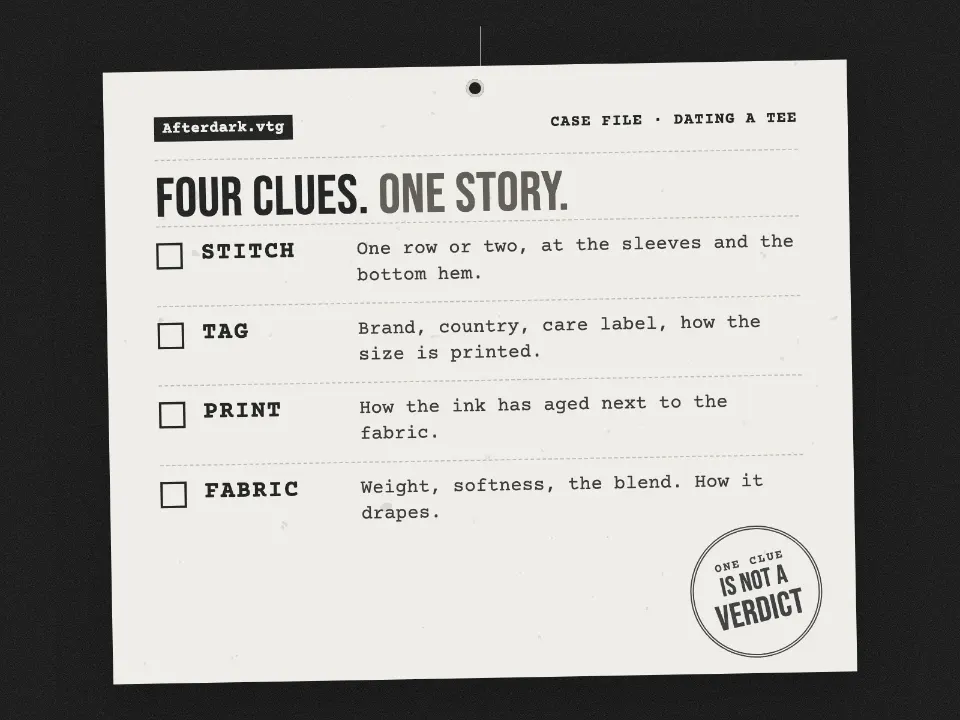
When the stitch, the tag, the print and the fabric all tell the same story, you have a case.
On our files
Our curators can log a stitch code on a piece, like 1-1-1 or 1-2-2: left sleeve, right sleeve, bottom hem. 1 for single, 2 for double.
Buyers see it as SINGLE, DOUBLE or MIXED.
Only want the single stitch pieces? Use the Stitch filter in the archive.
Got a single stitch tee sitting in your cabinet? Sell to the archive. We'll take a look.
Case closed. For now.